One of the most common challenges organizations face when producing a storytelling video is knowing how to conduct interviews that actually support the final narrative. Many interviews are approached like casual conversations. A few general questions are asked, the subject shares their thoughts, and the editor later tries to piece together a story from whatever was captured.
While this approach sometimes works, it often results in scattered sound bites that lack a clear narrative arc. The most effective storytelling videos are not built from random answers. They are built intentionally, with interviews designed to support a specific structure. A helpful way to understand this structure is by comparing it to something most people learned in school: how to write an essay.
In writing, essays follow a familiar format. They begin with an introduction that establishes the main idea. They move into body paragraphs that support that idea with evidence and examples. Finally, they end with a conclusion that reinforces the message and leaves the reader with a final takeaway. A well-produced storytelling video follows the exact same structure. Understanding this parallel is one of the most useful storytelling techniques for anyone producing nonprofit videos, corporate videos, brand storytelling content, or customer story videos.
The Introduction: Establishing the Mission or Goal
In essay writing, the introduction introduces the topic and presents the thesis. It gives the reader enough context to understand what the rest of the piece will explore. A storytelling video works the same way. The audience needs to understand what the organization or company does and why the story matters before they can connect with it.
In many storytelling videos, this role is filled by a leader within the organization or company. This might be a founder, executive, program director, or department leader. Their interview provides the big-picture explanation of the mission, the goal of a program, or the purpose behind a product or service.
This portion of the video essentially serves as the thesis of the story. It explains what problem the organization or company is addressing and what impact the work is intended to create. Interview questions at this stage should help the subject clearly articulate that purpose.
For example, an interviewer might ask questions such as: What inspired the creation of this program or initiative? What challenge are you trying to solve for your customers or community? Why is this work important right now?
These types of questions help establish the context of the story and introduce the central message the video will support.
From a video storytelling perspective, this introduction sets the stage. The viewer now understands the mission or goal. But just like in an essay, simply stating the idea is not enough. The story needs evidence.
The Body: Proving the Impact Through a Personal Story
In a traditional essay, the body paragraphs provide supporting evidence that reinforces the thesis. These paragraphs might include research, examples, or case studies that demonstrate why the central argument is valid.
In a storytelling video, the strongest evidence usually comes from people. Once the organization or company has explained its goal, the story often shifts to someone who has directly experienced the impact of that work. Depending on the context, this might be a program participant, a customer, a client, an employee, or a community member.
Their story becomes the proof that the mission or value described earlier is real and meaningful. This is where the emotional connection of the video typically emerges. A well-structured interview guides the subject through a clear personal narrative that helps the audience understand what life or work looked like before the program, service, or product entered the picture, how that change occurred, and what the outcome has been.
Interview questions for this portion of the story should guide the subject through that progression. The conversation might begin by exploring the challenges they faced before encountering the organization or company. Questions like “What was your situation before you discovered this program or service?” or “What challenges were you dealing with at the time?” help establish the starting point of the story.
From there, the interviewer can move into how the individual first encountered the organization and what their experience was like once they became involved. Questions such as “How did you first learn about the program or company?” or “What was your experience like when you began working with them?” help reveal the turning point.
Finally, the interview can explore the outcome. Asking questions like “What has changed for you since becoming involved?” or “How has this experience impacted your life or your work?” allows the subject to describe the results in their own words. These responses provide the real-world evidence that supports the mission or value introduced earlier.
The Conclusion: Bringing the Story Full Circle
A strong essay always ends with a conclusion that restates the thesis and summarizes the main points. The purpose is not simply to end the piece, but to reinforce the central idea and leave the reader with a clear understanding of why it matters.
Storytelling videos follow the same pattern. After the participant or customer’s story demonstrates the real-world impact of the program, product, or service, the narrative often returns to the organizational or company leader who appeared at the beginning of the video. This brings the story full circle and reconnects the personal experience to the broader mission.
At this stage, interview questions should encourage reflection and forward-looking perspective. The goal is to reinforce the importance of the work and help the audience understand what comes next. Questions such as “Why is this work so important right now?” or “What do you hope people take away from this story?” often produce strong concluding statements.
Many storytelling videos also include a passive or direct call to action at this point. Depending on the purpose of the video, this might encourage viewers to support a cause, explore a service, consider a product, or simply learn more about the organization. Even when the call to action is subtle, it gives the story a sense of direction and purpose.
Why Interview Structure Matters in Video Production
Approaching interviews with this narrative structure in mind has a major impact on the final video. Instead of collecting disconnected answers, the interviewer is intentionally capturing the building blocks of a story. The introduction establishes the mission or goal, the participant or customer’s experience demonstrates the impact, and the conclusion reinforces the message.
This structured approach is valuable across nearly every type of storytelling video, from nonprofit impact videos to corporate brand stories and customer testimonial videos. When the interview questions are designed to follow a clear narrative arc, the editing process becomes significantly easier and the final video becomes far more compelling.
Ultimately, strong storytelling in video production begins long before the camera starts rolling. It begins with understanding the narrative structure you want to build and approaching interviews with that structure in mind.
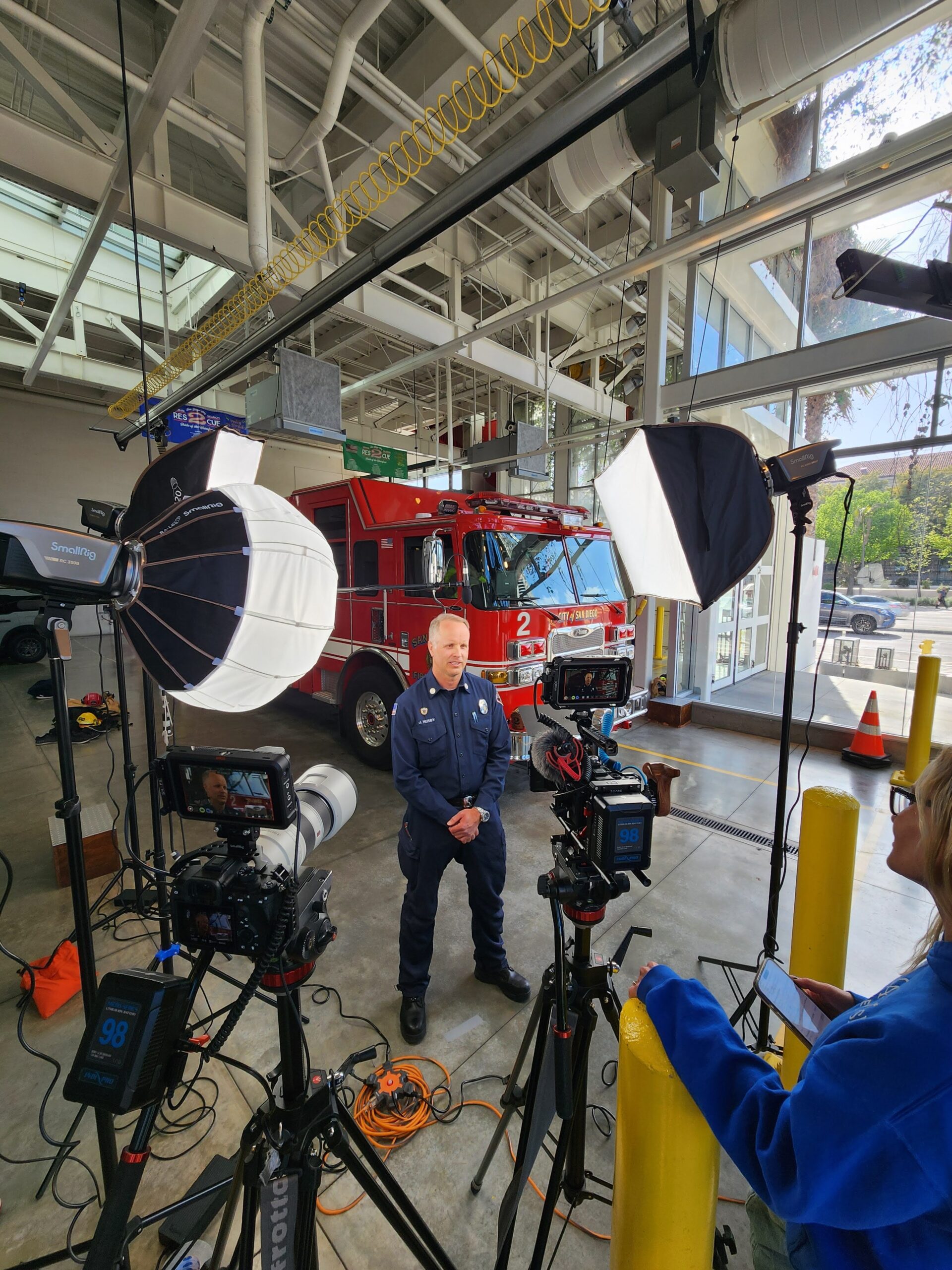
At F&L Media, we work closely with our clients throughout this process. While we typically do not write interview questions ourselves, we help guide the storytelling by identifying the key pieces needed to build a strong narrative. During interviews, our team often listens for moments where an idea can be clarified, expanded, or expressed in a more meaningful way. We frequently help draw out specific soundbites that strengthen the story and ensure the final video communicates the intended message clearly.
By helping clients understand the structure behind effective storytelling videos, we help transform interviews into focused, engaging narratives that connect with audiences and communicate impact.